
I’ve been using Spotify as my primary source of music since 2016 when I was first able to take advantage of their Spotify for Students discount. I wouldn’t call myself a top user of Spotify – my phone tells me that I use the app an average of 50 minutes a day – but I am very familiar with these examples of AI in Spotify and how they have integrated artificial intelligence into their app.
Spotify Wrapped
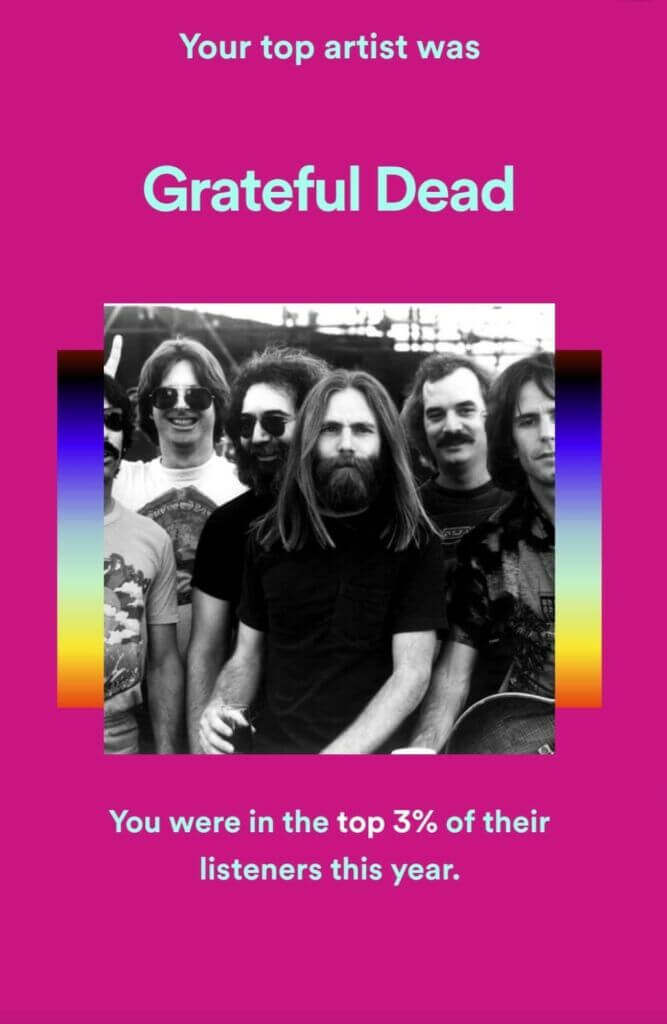
By now, we are all probably familiar with this example of AI in the Spotify app. Spotify Wrapped came out in 2015 and later became quite a sensation on social media. Every year since 2015, Spotify will present to you your Top Songs of the year, how many hours you spent listening to a certain artist or song, and how you compare among other listeners (i.e. whether you were in the top 0.5 percent of Taylor Swift listeners or not). Spotify Wrapped is possible due to algorithms that process a listener’s data (listening history, playlists, skips, likes, and more) to create a musical profile for that user. That musical profile gets packaged up into the Spotify Wrapped that we have come to anticipate each year.
Despite the anticipation, many users (including myself) have complained that their Spotify Wrapped does not accurately reflect their year-round music preferences. And that is because Spotify does not use year-round data to create Spotify Wrapped and instead uses the data between January 1 – October 31 of a given year. The October 31 cut-off allows for Quality Assurance to take place. Although I understand the importance of QA work (that is a big part of what I do at work), I can’t help but think that this means that Spotify Wrapped results will be skewed toward the first half of the year. That data can be skewed is something to consider across all AI systems.
Discover Weekly
Discover Weekly was released the same year as Spotify Wrapped and it is a playlist created by Spotify every Monday of each week that includes 30 new songs based on music you’ve listened to and liked. Spotify uses collaborative filtering to analyze the listening behavior and preferences of users and find new content for individual users.
For example, I listen to a lot of Grateful Dead, so I must be in a pool of people that also listen to the Grateful Dead. Since we have that artist in common, Spotify will look at the music that other Grateful Dead fans have liked and recommend that music to me if I have not listened to it yet. This is why in my Discover Weekly playlist you’ll find suggestions like the one below that are funky and jam-bandy (despite the cool cover art, I wasn’t a big fan of this song, though).
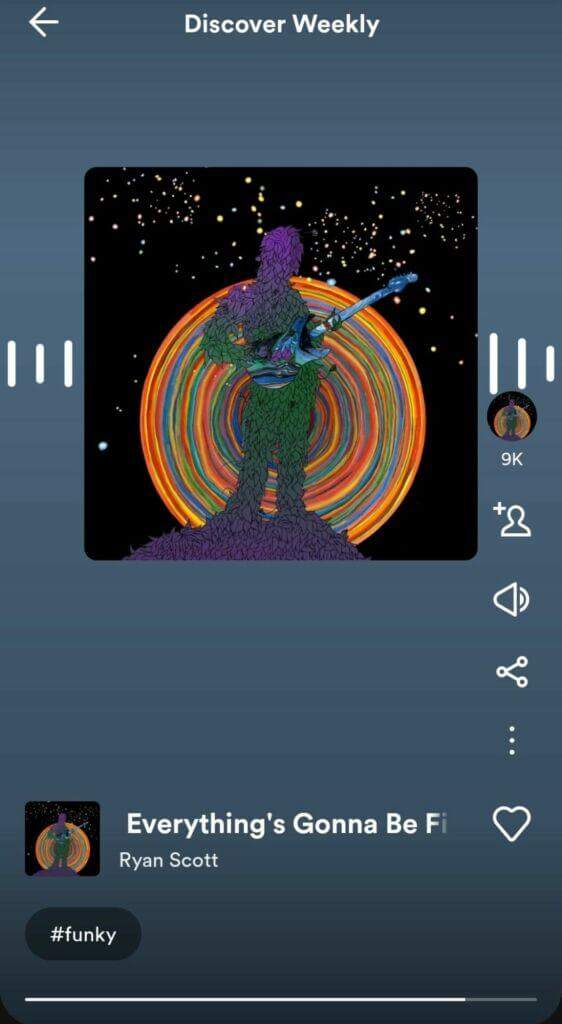
And how does Spotify know that Ryan Scott’s “Everything’s Gonna Be Fine” can be described as “funky” and “jam band”? Well, because of Natural Language Processing, which is the ability of an AI to understand words. Spotify’s AI will read content on the Internet about artists and songs to understand what those artists and songs are described as and tag them accordingly.
Spotify DJ
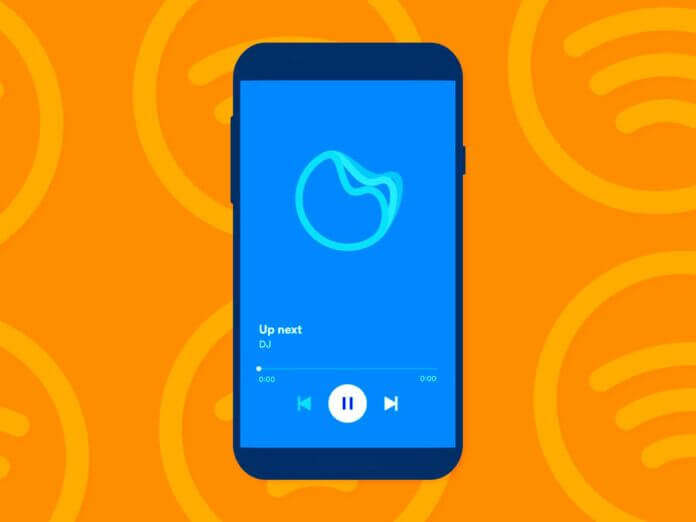
Spotify DJ can be described as a better version (for some) of Discover Weekly; you’ll get new song recommendations with the addition of a talking AI. Spotify DJ may be less familiar to readers than Discover Weekly because it is fairly new. Spotify released Spotify DJ in February of 2023. The DJ has a “stunningly realistic voice” but won’t hide the fact that it is an AI (it tells you that upfront). Interestingly, Spotify also chose to make the DJ a green orb whose “mouth” moves when they speak but did not give it any other human-like features.
However, the DJ (called “Xavier” or “X”) will tell you that it is not an assistant so it won’t help with setting alarms or reminders. No, DJ X is here to play your favorite music intermingled with helpful commentary between tracks on the history of the artist and the themes of the song (you know, like a real-life DJ does). DJ X knows your music tastes and will play songs you’ve listened to before as well as recommend new ones. It is constantly learning about your tastes, so it pays attention to your playlists, what songs you’ve liked, and what songs you’ve skipped.

Spotify Presale Codes
I first found out about the Spotify Presale when I was trying to get tickets to see Goose at the Red Rocks Amphitheater in Colorado this year. I knew that the show would likely sell out (and they did), so I made sure that I was ready to get tickets during the artist presale (the one where you get a code from the artist to access a limited number of tickets before the General sale). I was luckily able to snag two tickets.
But while on the AXS website, I noticed that there had been another type of presale called a Spotify Presale, which had happened the day before. I did my research and found that Spotify uses the data they collect about a user’s activity to determine which users are the top listeners for a certain artist (this data is also used to create the Spotify Wrapped at the end of the year). Then, when an artist goes on tour, Spotify will send their top fans an email with a presale code so that those fans can get a ticket even before the fans that signed up for the Artist or Venue Presale. I haven’t received an email from Spotify with a presale code for an artist I follow, so I guess I’m not a top fan yet. Perhaps next year!
Forthcoming AI Features
With Spotify’s track record of harnessing data and artificial intelligence, I am sure that we will see even cooler features very soon. But until then, these are definitely worth your while!
Tweet
Share
Share
- Artificial Intelligence
- Art and Museums
- Entertainment and Tourism
- Artificial Intelligence
- Art and Museums
- Entertainment and Tourism