

The U.N. predicts the earth’s population will reach 9.7 billion by 2050. As people move to more populated areas, cities face the challenges of providing enough power for everyone while using outdated power grids.
Current electric grids — built mainly in the 1890s — are overburdened and inefficient. One fallen tree branch can cause blackouts in entire areas for hours. Congested roadways and increased emissions continue to impact the health and happiness of people worldwide.
The Internet of Things (IoT) has the power to reshape the way we think about cities across the world. IoT connects people and governments to smart city solutions. Connecting and controlling devices has given rise to smart grid technology, designed to improve and replace older architecture.
What Is the Smart Grid?
According to the International Energy Agency (IEA), the smart grid is critical to building a secure, clean future. The smart grid must be considered a mission-critical asset that is part of an IoT framework. It can be used to remotely monitor and manage:
- Street lighting
- Transmission lines
- Substations
- Cogeneration
- Outage sensors
- Early detection (e.g., power disturbances due to earthquakes and extreme weather)
How Smart Cities Are Adopting Smart Grid Technology
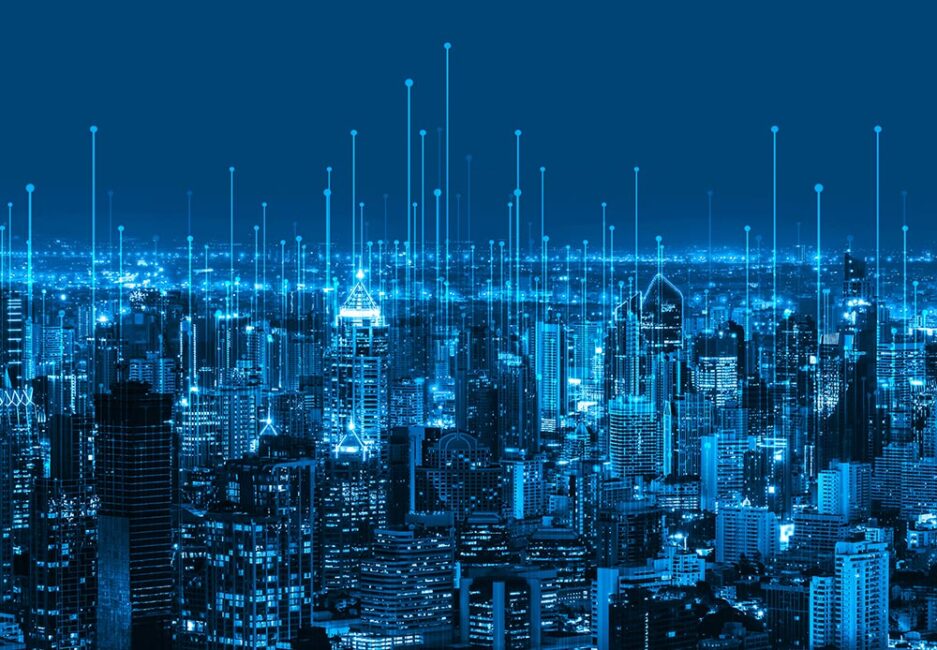
The smart grid does this through private, dedicated networks, connecting devices that are distributed to businesses and homes citywide, including:
- Smart meters
- Data concentrators
- Transformers
- Sensors
Smart grid IoT technologies contribute to robust and efficient energy management solutions lacking in the existing framework. The IoT smart grid enables two-way communication between connected devices and hardware that sense and respond to user demands. As a result, a smart grid is more resilient and less costly than the current power infrastructure.
Smart Grid, Smart Energy: Top 7 Benefits of IoT Monitoring and Regulation
Current power grids aren’t made to withstand the immense draw on resources and the need to transmit data for billions of consumers worldwide. The smart grid can:
- Detect energy spikes and equipment failure
- Prevent power outages
- Rout power to those in need faster
Once fully integrated, smart grid technologies can change how we work and interact with the world. Here are some benefits of transitioning to IoT-enabled smart grid technology:
1. Smarter Energy Use

Smart grid technologies will help to reduce energy consumption and costs through usage and data maintenance. Intelligent lighting through smart city technology will be able to:
- Monitor usage across various areas
- Immediately adapt to settings like rain or fog
- Adjust output to meet the time of day or traffic conditions
- Detect and address lighting outages instantly
For consumer applications, users can adjust the temperature of their home thermostats through apps while at work or on vacation.
2. Cleaner Energy Use

Smart grid technologies are less demanding on batteries and more carbon efficient. They are designed to reduce the peak load on distribution feeders. The U.S. Department of Energy is integrating green technology into its IoT smart management for more sustainable solutions. These solutions have the potential to benefit all distribution chains and include:
- Optimized wind turbines
- Solar cells
- Microgrid technologies
- Feeder automation systems
3. Lower Costs
According to the Department of Energy, today’s electrical system power outages cost the American economy anywhere from $28 billion to $169 billion per year.
As the world’s population grows, the older grids won’t keep up with the increasing demands. Smart grids are designed to lower long-term costs through smart energy IoT monitoring and source rerouting for fast recovery when a power failure is detected.
4. Improved Transportation and Parking

As more electric vehicles enter operation, IoT smart sensors can collect real-time data to relay information to drivers and authorities. Accessing this data from smart sensors will enable cities to:
- Reduce traffic congestion
- Provide better parking solutions
- Alert drivers to traffic incidents and structural damage to city landscapes
- Allow for automatic payments at road tolls and parking meters
IoT technology is also at the core of expanding electric charging stations that heavily tax the power grid.
5. Help with Waste and Water Management

Water treatment and distribution and wastewater processing are significant drains on the energy grid. Smart cities improve efficiency and reduce costs in their waste and water management solutions. In addition, IoT applications can provide real-time data to track inventory, reduce theft and minimize loss.
Smart energy analytics can gather water flow, pressure and temperature data to help consumers track usage habits. Timers and infrastructure modules can regulate usage and reduce waste.
6. Energy Enablement in Developing Countries
This 2021 IEA report on clean energy transitions discusses how smart grids can provide electricity to rural areas. They can transition to community grids that connect to regional and national grids. These grids will be critical for deploying new power infrastructures in developing countries experiencing population overflow impacts. Starting with new technology ensures the best path to economic growth.
7. Greater Insight into Regional Issues
Optimized smart city solutions mean greater insight into regional issues. Imagine a smart grid set up to respond to a regional drought or wildfires in a dry area. Adaptive city fog lighting would be great for a city in the northeast U.S. but ineffective elsewhere. Customized technology and better data collection can improve the daily lives of countless regional populations.
Finding Smart City Solutions for the Future
Smarter cities are built on smarter infrastructure. Our IoT modules and services enable smart devices and solutions for smart cities and the smart grid. The smart grid allows organizations to improve efficiency while creating more sustainable cities everywhere.
Contact us to learn how solution providers have used our IoT modules, connectivity services and solutions to help cities worldwide improve:
- Traffic and parking safety
- The cost of lighting
- Waste and water management
Request a Consultation
Editor’s Note: This blog was originally published on 10 May 2018 and has since been updated.