
A machine-learning study that analysed hundreds of thousands of earthquakes beat the standard method at predicting the location of aftershocks.
Scientists say that the work provides a fresh way of exploring how changes in ground stress, such as those that occur during a big earthquake, trigger the quakes that follow. It could also help researchers to develop new methods for assessing seismic risk.
“We’ve really just scratched the surface of what machine learning may be able to do for aftershock forecasting,” says Phoebe DeVries, a seismologist at Harvard University in Cambridge, Massachusetts. She and her colleagues report their findings on 29 August in Nature.
Aftershocks occur after the main earthquake, and they can be just as damaging—or more so—than the initial shock. A magnitude-7.1 earthquake near Christchurch, New Zealand, in September 2010 didn’t kill anyone: but a magnitude-6.3 aftershock, which followed more than 5 months later and hit closer to the city centre, resulted in 185 deaths.
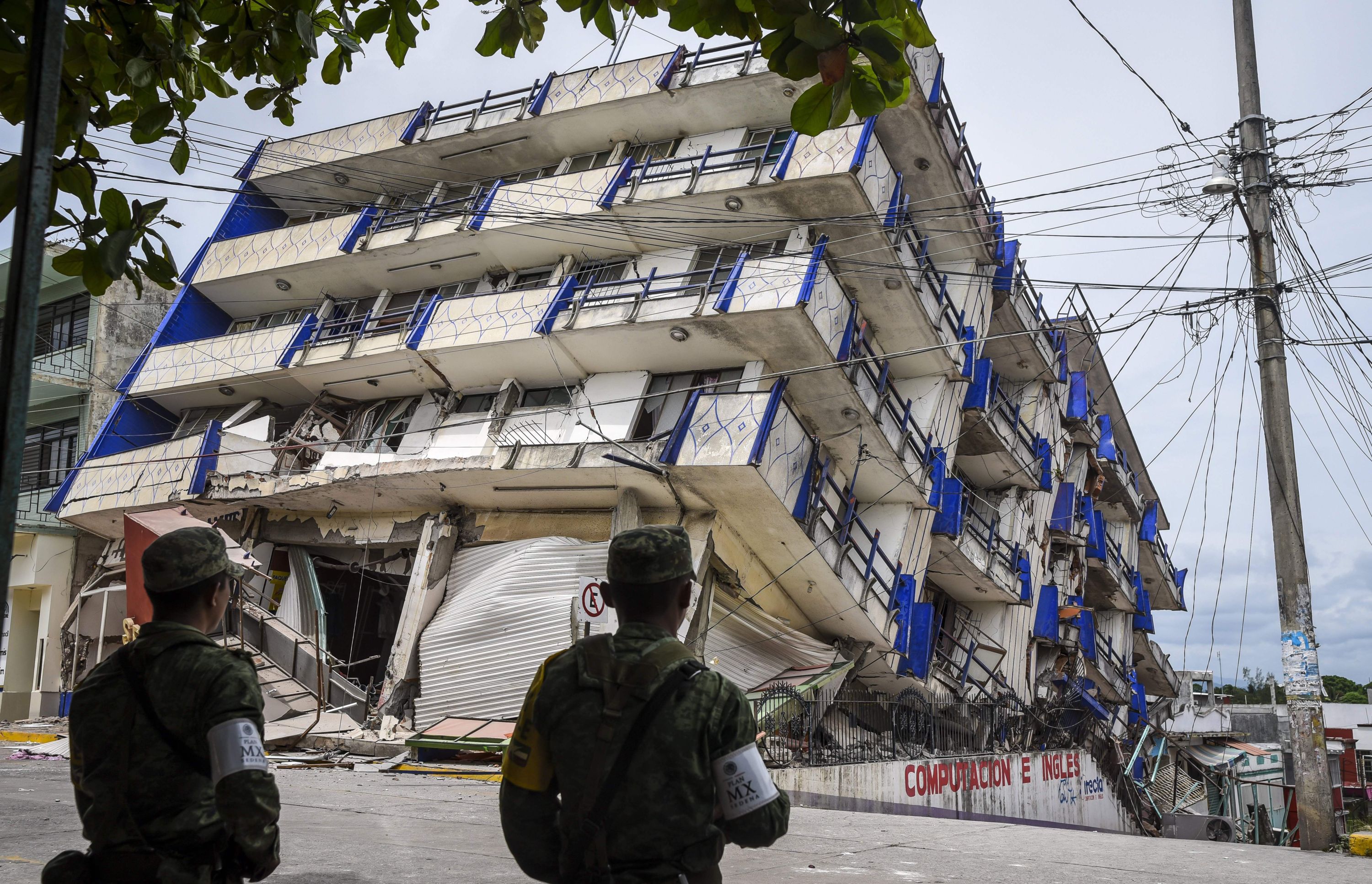
Seismologists can generally predict how large aftershocks will be, but they struggle to forecast where the quakes will happen. Until now, most scientists used a technique that calculates how an earthquake changes the stress in nearby rocks and then predicts how likely that change would result in an aftershock in a particular location. This stress-failure method can explain aftershock patterns successfully for many large earthquakes, but it doesn’t always work.
There are large amounts of data available on past earthquakes, and DeVries and her colleagues decided to harness them to come up with a better prediction method. “Machine learning is such a powerful tool in that kind of scenario,” DeVries says.
Neural networking
The scientists looked at more than 131,000 mainshock and aftershock earthquakes, including some of the most powerful tremors in recent history, such as the devastating magnitude-9.1 event that hit Japan in March 2011. The researchers used these data to train a neural network that modelled a grid of cells, 5 kilometres to a side, surrounding each main shock. They told the network that an earthquake had occurred, and fed it data on how the stress changed at the centre of each grid cell. Then the scientists asked it to provide the probability that each grid cell would generate one or more aftershocks. The network treated each cell as its own little isolated problem to solve, rather than calculating how stress rippled sequentially through the rocks.
When the researchers tested their system on 30,000 mainshock-aftershock events, the neural-network forecast predicted aftershock locations more accurately than did the usual stress-failure method. Perhaps more importantly, DeVries says, the neural network also hinted at some of the physical changes that might have been happening in the ground after the main shock. It pointed to certain parameters as potentially important—ones that describe stress changes in materials such as metals, but that researchers don’t often use to study earthquakes.
The findings are a good step towards examining aftershocks with fresh eyes, says Daniel Trugman, a seismologist at the Los Alamos National Laboratory in New Mexico. “The machine-learning algorithm is telling us something fundamental about the complex processes underlying the earthquake triggering,” he says.
The latest study won’t be the final word on aftershock forecasts, says Gregory Beroza, a geophysicist at Stanford University in California. For instance, it doesn’t take into account a type of stress change that happens as seismic waves travel through Earth. But “this paper should be viewed as a new take on aftershock triggering”, he says. “That’s important, and it’s motivating.”
This article is reproduced with permission and was first published on August 29, 2018.