

The average person looking at the upper corner of their phone might ask themselves, “what is 4G LTE?” or “what is LTE data?”
LTE stands for “Long-Term Evolution.” It’s often conflated with 4G LTE, the fourth generation of global wireless communication and data transmission.
LTE is one of the fastest-developing mobile technologies and connects one in four mobile users globally. Although it is not the same as 4G, the two technologies are vital to Internet of Things (IoT) enablement.
The Evolution of Cellular LTE Technology
The first generation (1G) of mobile technology emerged in the 1980s with analog voice. Eventually, it was supplanted by 2G and 3G networks.
Today, mobile network operators (MNOs) have fully established their global LTE rollouts of 4G networks. They have used these networks to transition from 2G and 3G generations to LTE.
The Rise of LTE
Since its commercial launch in 2010, LTE has been pivotal to 4G adoption. However, this paradigm was not always the case.
4G began with LTE and Worldwide Interoperability for Microwave Access (WiMAX). These competing systems were on the Orthogonal Frequency Division on Multiple Access (OFDMA) modulation scheme. In the end, LTE dominated the broadband market and spread across verticals.
Decoding the Semantics
For clarification, experts often say “4G LTE” to delineate between 3G’s and 4G’s capabilities. LTE represents a gradual shift toward the 4G standard.
5G and LTE
Despite the hype behind 5G, it will not replace 4G soon. 4G LTE networks will continue to serve as a leading mainstream mobile technology, as 5G networks will depend on it.
How Does LTE Support IoT?
IoT constitutes a network of real-world objects that use sensors to collect and exchange data with other devices via the internet. IoT devices can be small, like virtual home assistants, or massive, like factory machinery.
There are over 13 billion IoT devices today. Sustaining large-scale, high-speed connection deployments requires considerable bandwidth. LTE provides a reliable connection for IoT devices to complete data transfers to the cloud and other devices.
One of the important things this technology also provides is the ability for cellular LPWA networks (e.g., Cat M and NB-IoT) to run on its infrastructure. (Enabling this ability requires some dedicated development on the LTE network.) In many use cases, Cat M and NB-IoT are the most suitable technologies for IoT applications.
Use Cases and Benefits
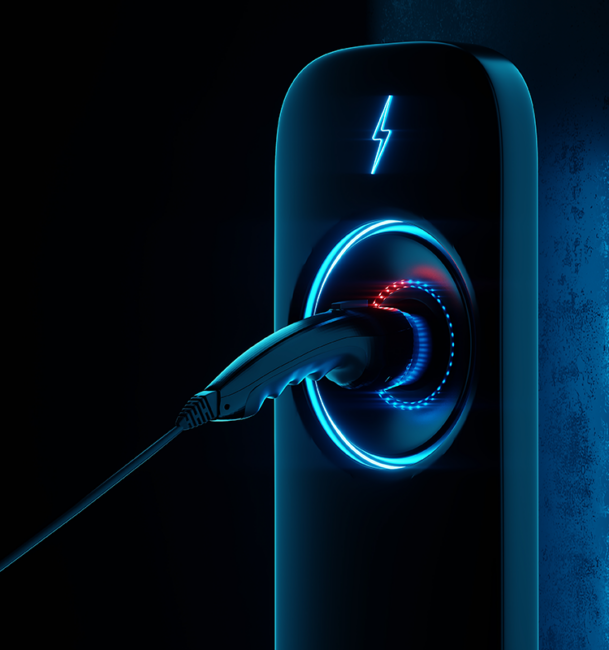
LTE IoT devices have a well-established presence in many machines and equipment, such as:
- Electric vehicle charging stations
- Health monitoring gadgets
- Home and commercial security
Cost reduction drives these devices, as this technology is more spectrally efficient and flexible than its predecessors. Also, IoT data is transported faster over 4G LTE networks at a lower cost per bit.
Moreover, LTE IoT devices are future-proof and fully compatible with the fast-arriving 5G paradigm shift.
Solutions for Global IoT Deployments
Our LTE solution portfolio connects deployments that leverage local, multiregion and global plans enhanced with one of the market’s leading connectivity management platforms. We can deliver multi-IMSI capabilities and IoT connectivity plans based on embedded SIM (eSIM) technology in a competent and trouble-free manner.
LTE plans can be tailored for homogeneous or mixed deployments in dimensions, such as:
- Low data rates with LTE-M and NB-IoT
- Ultralow power support from PSM and eDRX
- Mobile broadband
Our IoT connectivity plans and SIM cards overcome the challenges of small or large industrial deployments. Speak with an IoT expert to request your IoT connectivity starter kit.
Request a Starter Kit