
What Is Small Cell Technology?

Major telecommunications providers in the United States are set to use small cell technology to roll out 5G coverage. What does this mean?
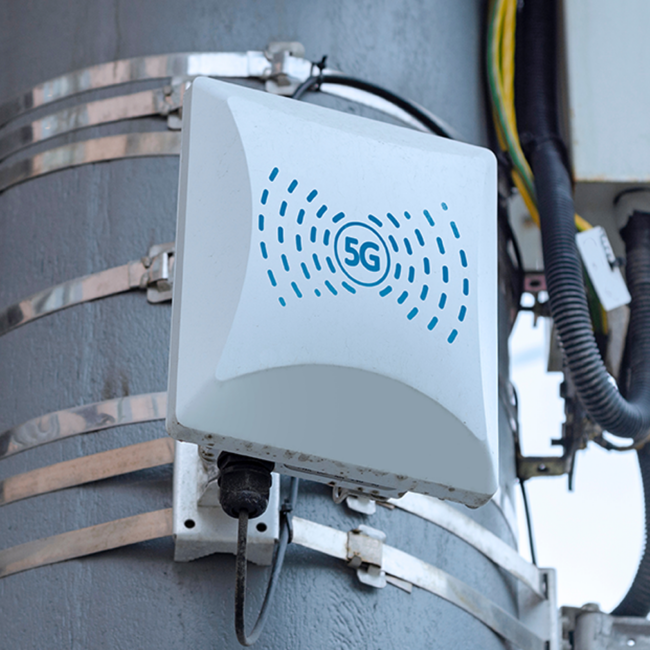
In short, small cells use low-power, short-range wireless transmission systems (or base stations). They cover small geographical areas or small-proximity indoor and outdoor spaces.
Small cells have the same characteristics as base stations used by telecom companies for years. However, they can handle high data rates for mobile broadband and consumers, as well as high densities of low-speed, low-power devices for IoT.
These capabilities make them pivotal for 5G cell planning to deliver:
- Ultrahigh speeds
- One million devices per square mile
- Latencies in the millisecond range
How Small Cell Transceivers Work
According to RF Page, small cells improve leveraging of multiple-input, multiple-output (MIMO), beamforming and millimeter wave (mmWave). This concept simplifies transmission station deployment and speeds implementation.
In addition, these transceivers can mount to the wall for indoor applications. For outdoor coverage, small towers and lamp posts are used. Backhaul connections are less complicated than before and are usually made of fiber, wired or microwave connections.
In 3GPP Release (Rel) 17 and 18, there is also a concept of integrated access and backhaul for mmWave technology. Instead of fiber or other means, ultrahigh-speed mmWave signals connect cell sites’ backhaul directly over a cellular connection. It requires line of sight between the sites but saves capital and operating expenses because no new fiber needs to be installed.
Small Cell Types
There are three types of small cells in the industry today:
- Femtocells
- Picocells
- Microcells
Each type has its distinction based on its coverage capability and the number of individual users it can support.
Network cell planners and engineers sometimes consider femtocells in a separate class. Their cost, purpose and installation processes differ from other small cells, which are more like traditional macrocells. Femtocells are positioned in the DIY and IT technician markets for quick home or business installation, like a Wi-Fi access point.
Macrocells vs. Small Cells vs. Femtocells
| MACROCELLS | SMALL CELLS | FEMTOCELLS | |
| Average Size | 50-200 feet tall | Pizza box size (18 x 18 inches) | Paperback book size (5 x 8 inches) |
| Average Coverage Range | A few miles | 100 yards (football field) | A home or small business |
| Average Cost to Install | $200,000 | Under $10,000 | $100 |
| Deployment | 200,00 in the U.S. | Five to 10 times more than macrocells once fully deployed in the U.S. | Anyone can purchase for their home or small business |
Femtocells
Femtocells are small mobile base stations that help extend coverage for residential and enterprise-level applications. These are mainly used to offload networks when they become congested. Femtocells can extend coverage and enhance building penetration for indoor consumers.
Femtocell Features:
- Coverage area: 30-165 feet (10-50 meters) (indoor)
- 100 milliwatts
- Supports 8-16 users
- Backhaul: home or enterprise Ethernet
- Low cost
Picocells
Another type of small cell technology, picocells are small cellular base stations that cover small indoor areas like buildings or aircraft. Picocells are great for small enterprises to provide extended network coverage and large data throughput. Applications include:
- Offices
- Hospitals
- Shopping complexes
- Schools and universities
Picocell Features:
- Coverage area (indoor): 330-820 feet (100-250 meters)
- 250 milliwatts
- Supports 32-64 users
- Backhaul: wired, fiber
- Low cost
Microcells
The microcell is a cell in a mobile network served up by a low-power base station that covers limited areas, such as:
- Malls
- Hotels
- Unique spaces within smart cities or transportation hubs
Microcells are generally more substantial than picocells, though the distinction is not always clear. Moreover, the microcell can support a more significant number of users in unique geographical areas.
Microcell Features:
- Coverage area: 1,600 feet-1.5 miles (500 meters-2.5 kilometers)
- 2-5 watts
- 200 simultaneous users
- Backhaul: wired, fiber, microwave
- Medium costs (more expensive than femtocells and picocells)
Massive IoT vs. Mobile Broadband
IoT applications are already connecting millions of devices from high-speed cameras and autonomous robots. Mobile broadband connects to networks of low-data smart sensors, creating a massive machine communication infrastructure — massive IoT.
As mobile broadband and massive IoT infrastructures expand, traditional mobile networks have limitations for further enhancements to technological progress. Small cells play critical but different roles for:
- Mobile broadband: Small cells are vital in providing mmWave coverage, which requires line-of-sight coverage. Mobile network operators can use deployed small cells with the new mid-band spectrum licensed in the 3.5 GHz frequency range. They can overlay the new signals in the new spectrum to achieve increased capacity and higher average data rates due to the wide bandwidth (100 MHz).
- Massive IoT: Small cells lift the areal density of 5G connections for swarms of sensors and other low-power, low-data IoT devices.
5G is necessary to make way for new, advanced technologies that will be internet-, AI- and sensor-enabled. Companies and organizations will have to rethink or update antiquated IoT strategies.
Get Connected with Telit
Telit is the global leader in IoT enablement. Our enterprise-grade IoT modules, connectivity services and platforms help businesses leverage IoT for their digital transformation.
Telit is an active participant in the 5G ecosystem. We contribute device-side expertise for manufacturers and mobile infrastructure operators.
Speak with our IoT experts today and request to qualify for a 5G data card sample.
Editor’s Note: This blog was originally published on 12 March 2020 and has since been updated.